We have all dealt with it. A friend request pops up from someone you don’t know, but they have three mutual friends. Or worse, a profile with a generic anime photo starts commenting weird things on your business page. Or the absolute worst-case scenario: someone is impersonating you, using your photos and your name to message your family.
The immediate instinct is to go full Sherlock Holmes. You want to know who is behind the keyboard. Is it your ex? Is it a bot? Is it a scammer in a basement halfway across the world? You head to Google and type: “How to find IP address of Facebook user” or “Trace Facebook account owner.”
I need you to stop right there. Because the internet is filled with tools that promise to peel back the mask, and 99% of them are lying to you. If you are in North America, Europe, or Australia, you are operating under some of the strictest privacy laws in history. Mark Zuckerberg does not give up user data easily. There is no “Magic Button” to reveal a name. However, there are cracks in the wall. You can’t hack the mainframe, but you can spot the slip-ups.
Here is the realistic, non-Hollywood guide to figuring out who created a fake Facebook account.
1. The “Forgot Password” Loophole
This is the oldest trick in the book, and amazingly, it still works in 2026 (mostly). If you want a hint about who owns the account, ask Facebook to help you log into it.
The Method:
-
Go to the fake profile’s page.
-
Look at their Username in the URL bar (e.g.,
facebook.com/badguy123). -
Open a private/incognito browser window.
-
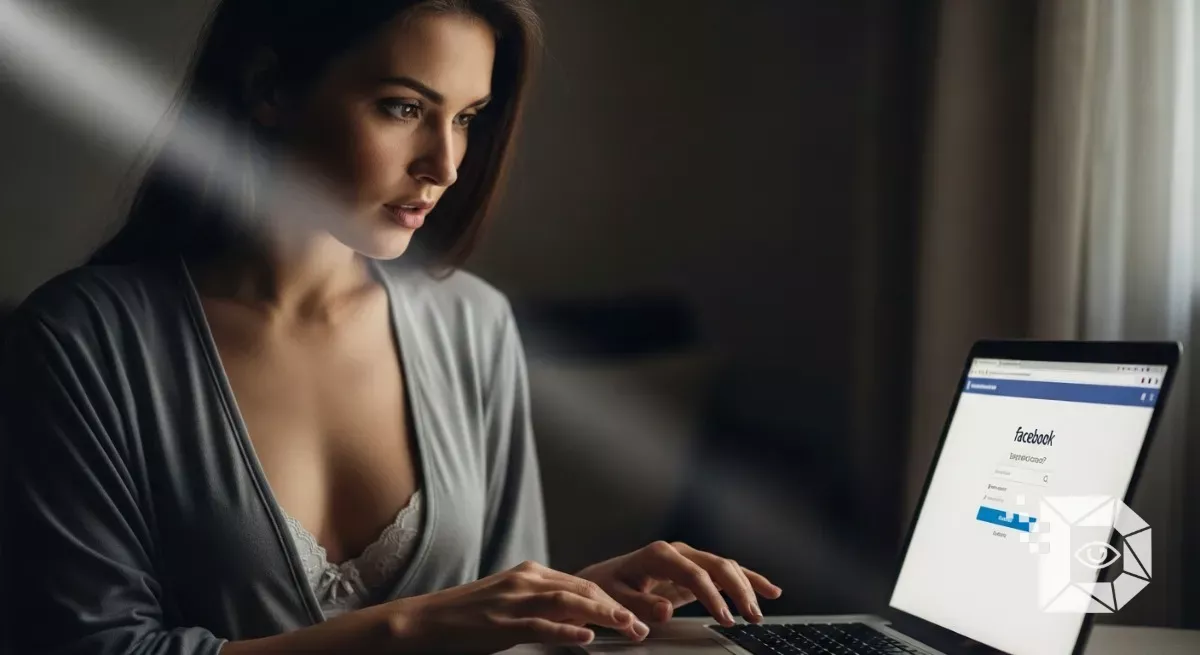
Go to the Facebook Login page and click “Forgotten password?”
-
Enter their username (or copy-paste their name).
-
Hit Search.
Facebook will say: “How do you want to receive the code to reset your password?” It will then show a redacted email address or phone number. You will see something like: j*******[email protected] or +1 (***) ***-8821.
What this tells you: It doesn’t give you the name, but it gives you a fingerprint.
-
Does that phone number end in the same four digits as your suspicious ex-partner?
-
Does the email start with a letter that matches your coworker’s name? Often, people are lazy. They use their real email addresses to create fake accounts. This simple check can confirm a suspicion without any hacking.
2. The “Vanity URL” Slip-Up
When you create a Facebook account, you can change your display name anytime. You can be “John Smith” today and “Batman” tomorrow. But people often forget to change their URL (the web address).
I once caught a harasser because their profile name was “Anonymous Vengeance,” but when I looked at the top of my browser, the URL was facebook.com/kevin.mitchell.94. They had created the account years ago under their real name, customized the URL, and then forgot about it when they pivoted to trolling. Always check the browser bar. The truth is often sitting right there in the HTTPs.
3. The Reverse Image Reality Check
If the profile photo is a person a pretty girl, a soldier, a doctor check if it’s real. Scammers almost always steal photos.
-
Right-click the profile picture.
-
Select “Search Image with Google” (or use tools like TinEye or PimEyes).
If that photo appears on a stock photography website, a Russian dating site, or an Instagram account belonging to a model in Brazil… you have your answer. It doesn’t tell you who created the fake account, but it tells you who didn’t. It confirms the account is a burner.
4. The “About” Section Time Machine
Scammers and trolls often buy “aged” accounts. Facebook’s algorithm trusts older accounts more than new ones. So, a scammer might hack an account belonging to a grandmother in Ohio who stopped using Facebook in 2018, and repurpose it to sell crypto scams in 2026.
Go to the “About” tab. Look at the “Page Transparency” (if it’s a page) or scroll back to the very first profile picture. If the account is posting angry political rants in London today, but the profile pictures from 2019 are of a sweet family vacation in Vietnam with comments in a different language… you are looking at a stolen account. The creator isn’t the person posting. The creator is a victim.
5. The Scam Warning (Read This Carefully)
This is the most important part of this post. When you are angry and desperate to find a culprit, you are vulnerable. You will find websites claiming: “Enter Facebook URL to reveal IP Address and Real Name! Only $29.99!”
These are scams. Do not pay them. Facebook does not expose IP addresses to public websites. It is technically impossible for a third-party site to “scan” Facebook and get an IP. The only people who can see an IP address are:
-
Facebook Engineers.
-
Law Enforcement (with a warrant). If you pay that $29.99, you aren’t fighting the scammer. You are feeding a new one.
6. When to Call the Pros (The Legal Route)
If the fake account is just annoying, block them and move on. But if the account is threatening you, posting revenge porn, or blackmailing you, this is no longer a DIY project. This is a crime.
In the US, UK, Canada, and Australia, police have a direct line to Facebook’s Law Enforcement Response Team. If you file a police report for harassment or extortion, the detectives can subpoena Meta (Facebook). Meta will hand over the IP address, the login timestamps, and the email address used to create the account. This is the only 100% accurate way to identify the owner. It takes time, and police won’t do it for petty drama, but for real danger, it is the nuclear option.
You probably won’t find their name. The internet provides anonymity, and Facebook protects it to keep their users safe (and to avoid lawsuits). But you can usually figure out what they are a bot, a stolen account, or a sloppy ex who forgot to hide their phone number. Use the clues, trust your gut, and don’t be afraid to use the “Block” button. It’s the ultimate power move.