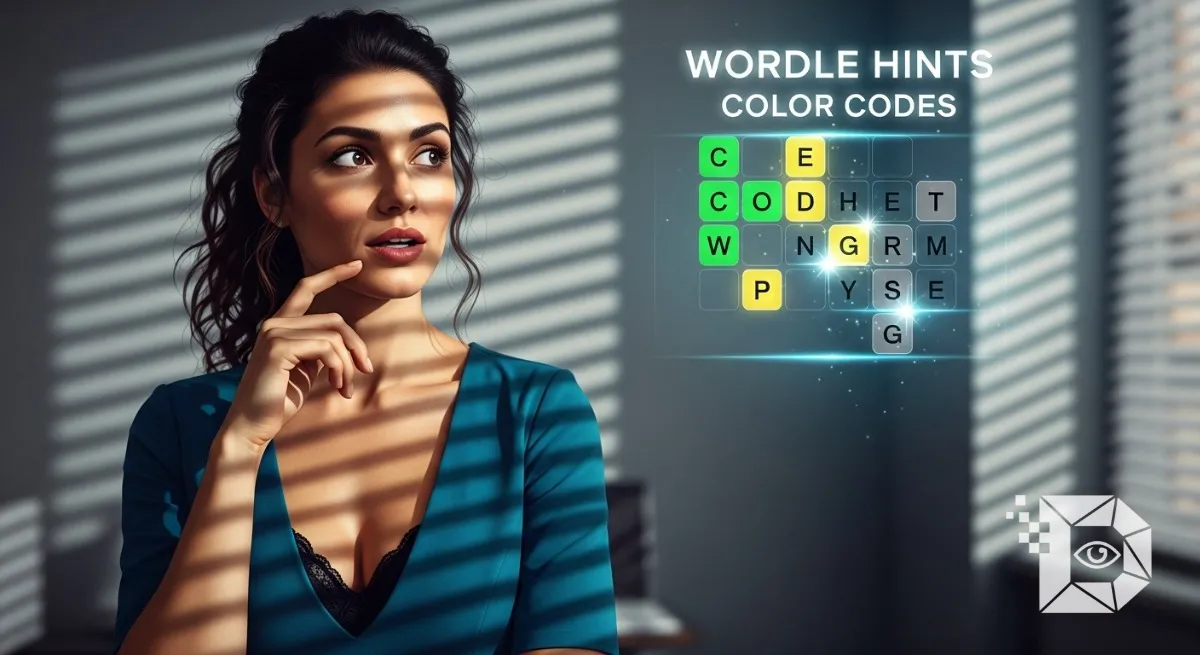
If you’ve ever stared at your Wordle grid wondering why some letters glow green while others stubbornly turn gray, you’re not alone. Wordle’s charm lies in its simplicity but beneath that simplicity is a clever system of hints that can dramatically improve your score once you learn to read them correctly. Whether you’re a beginner or someone looking to sharpen your strategy, understanding Wordle’s color codes is the foundation for solving puzzles quickly and confidently.
In this guide, we break down what Wordle’s hints really mean, how to use them effectively, and why mastering color clues can instantly level up your gameplay. Think of this as your newsroom-style crash course on decoding the most viral word puzzle on the internet.
What Do Wordle Hints Really Mean? A Clear Breakdown of the Color System
Wordle uses a three-color feedback system after each guess. These colors aren’t random they’re the heart of the puzzle. Here’s what each shade tells you:
🟩 Green: Correct Letter, Correct Spot
If a tile turns green, congratulations you’ve nailed that letter and its exact position.
This is the most powerful clue Wordle provides. Once a letter is green:
-
Lock it in.
-
Build future guesses around it.
-
Don’t move that letter.
🟨 Yellow: Correct Letter, Wrong Spot
Yellow tiles are subtle but essential.
They confirm:
-
The letter is in the solution,
-
But not where you placed it.
This is where good players become great. Yellow letters need repositioning not elimination.
⬛ / ⬜ Gray: Letter Not in Word
Gray means the letter doesn’t appear in the solution at all.
This helps you:
-
Reduce noise.
-
Avoid repeating useless letters.
-
Narrow the pool of possibilities faster.
Pro Tip: In some Wordle versions, a gray tile can also mean the letter appears less frequently than you guessed. For instance, if you enter “APPLE”, only one P might be valid.
Why Wordle’s Color Hints Matter The Science of Pattern Recognition
Color feedback is essentially a mini data system. You make a guess, Wordle gives you immediate visual information, and your brain begins forming patterns.
Researchers in game theory often describe Wordle as a constraint satisfaction puzzle, meaning:
-
You start with uncertainty.
-
Each hint removes possibilities.
-
The puzzle becomes simpler after every guess.
Understanding colors correctly can reduce your average solves from 5–6 guesses to just 3–4.
How to Use Wordle’s Color Codes Strategically
1. Start With a Strong Guess
words like CRANE, SLATE, AUDIO, or TRAIN give you:
-
multiple vowels
-
common consonants
-
broad coverage
This maximizes the value of your first feedback.
2. Analyze Greens First
Once you see a green tile:
-
Freeze that letter in place.
-
Build your next guess around maintaining those correct spots.
3. Redistribute Your Yellows
A yellow letter demands:
-
Testing new positions
-
Avoiding reuse of known incorrect spots
Good practice:
-
Move yellow letters systematically, not randomly.
4. Eliminate Grays Aggressively
Grays are your cleanup crew.
By removing gray letters from your mental list, you reduce the complexity of future guesses.
5. Use Patterns, Not Random Guesses
Once you have 2–3 confirmed letters, target high-frequency patterns like:
-
A_E
-
R_E
-
ING
-
TION (for harder Wordle variants)
A Realistic Example: Understanding Wordle Hints in Action
Let’s say your first guess is:
SLATE
Result:
-
S (gray)
-
L (yellow)
-
A (green)
-
T (gray)
-
E (yellow)
What this tells you:
-
The word has L and E, but not in those positions.
-
A is locked in the third spot.
-
S and T are not in the solution.
Good second guesses:
-
CLEAN
-
HEALD
-
PLEAD
These guesses reuse valuable letters and reposition yellows intelligently.
Why Beginners Misread Wordle Hints and How to Avoid Common Mistakes
❌ Mistake 1: Ignoring Duplicates
Wordle can include repeated letters.
If a letter turns yellow, it might appear twice.
❌ Mistake 2: Using the Same Gray Letter Again
If it’s gray, it’s gone.
Even AI-powered solvers eliminate gray letters instantly you should too.
❌ Mistake 3: Random Guessing Under Pressure
Random guesses waste precious attempts.
Use feedback to shape every next move.
Who Created Wordle and Why the Color System Works So Well
Wordle was created by software engineer Josh Wardle in 2021 as a simple game for his partner. The color system was designed to:
-
Make the puzzle intuitive,
-
Provide instant feedback,
-
Help users build problem-solving habits.
The game’s success skyrocketed because these colors are universally recognizable and require no language learning just logic.
FAQs
Q1. What does yellow mean in Wordle?
Yellow means the letter appears in the solution but is in the wrong position.
Q2. Does gray always mean the letter isn’t in the word?
Yes unless the word contains fewer duplicates than your guess.
Q3. Can letters repeat in Wordle?
Absolutely. Words like “SHEEP” and “BLOOM” are common.
Q4. Is there a best starting word?
Words containing multiple vowels and common consonants tend to be best.
Q5. How many guesses do you get?
Every Wordle puzzle gives players six attempts to find the correct five-letter word.
Conclusion
Once you truly understand what Wordle’s green, yellow, and gray tiles are telling you, the game becomes less of a lucky guess and more of a logic puzzle that you can solve with confidence. Learning how to interpret color codes is one of the fastest ways to improve your score whether you’re a casual player or aiming for a streak worth bragging about.